Clinical softwarefor heart and breath.
Corio is a health technology startup founded by an emergency physician. We build YÜREK, which turns paper ECGs into measurable signals, and SOLUK, a safe place to learn mechanical ventilation.
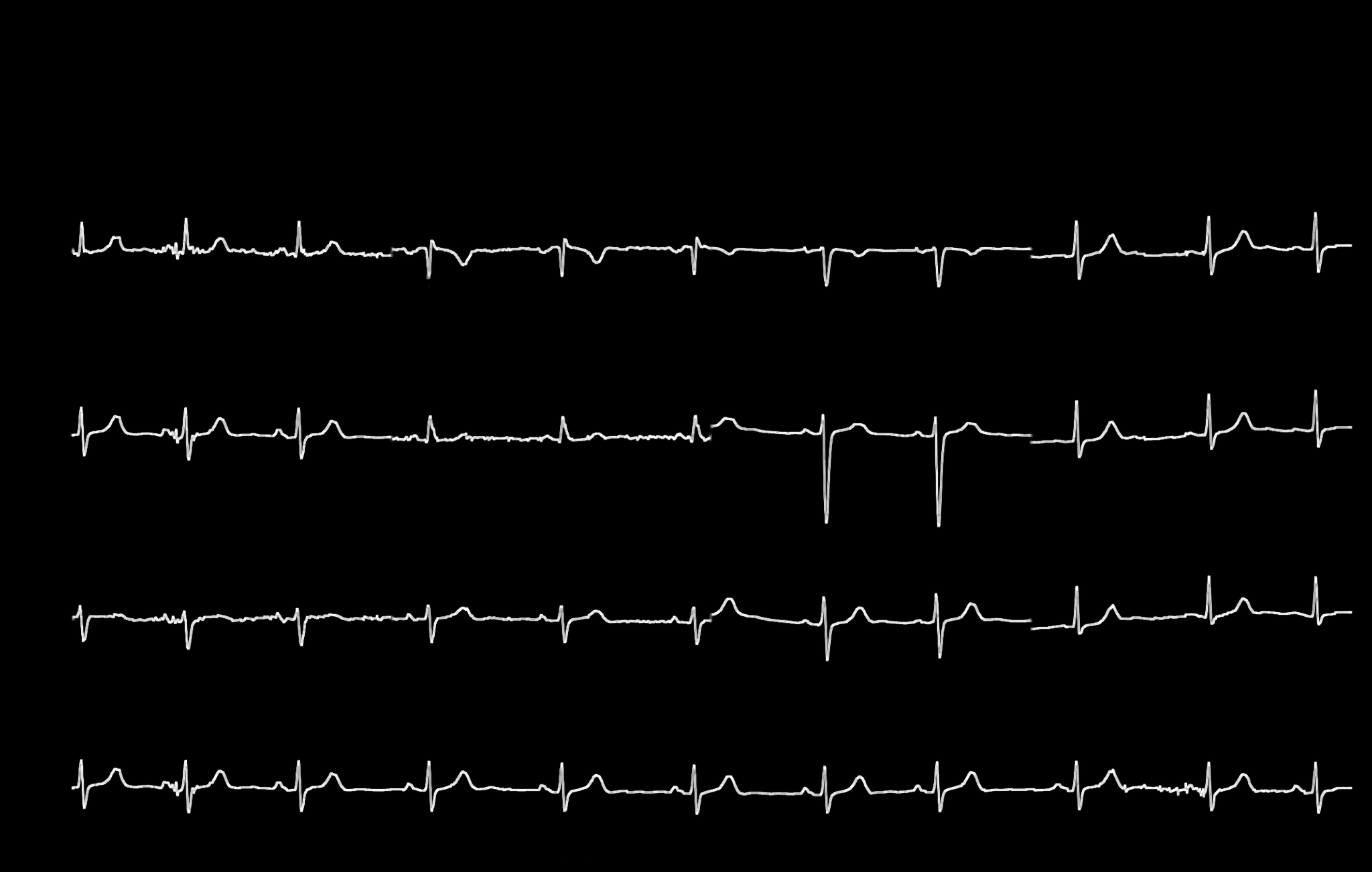
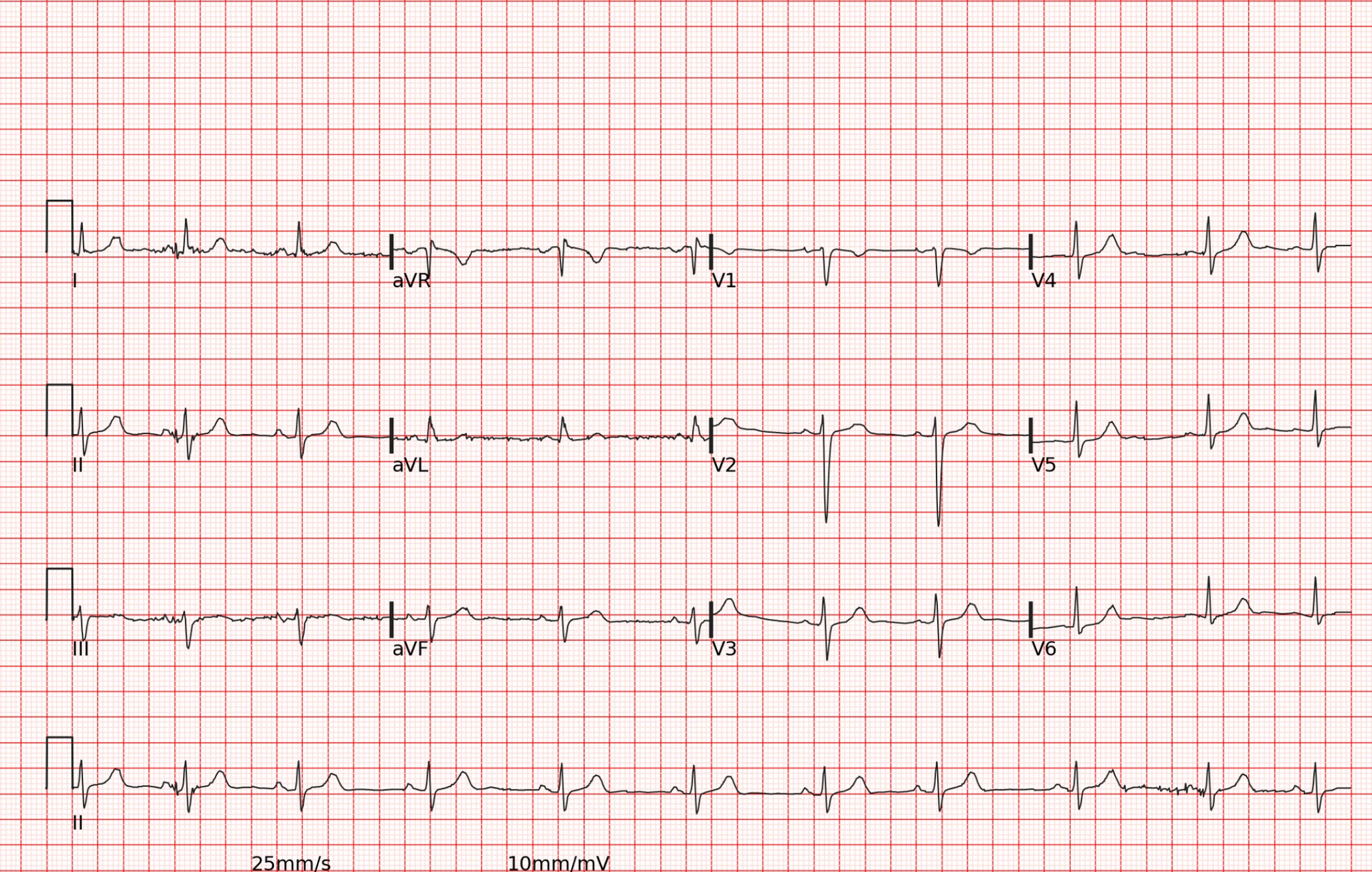
The paper in this scene comes from a real YÜREK run: the aligned ECG and the trace the model separated from it. The input is an anonymous test image based on PTB-XL.
Two gaps we see at the bedside every day.
Heart
In the emergency department an ECG often stays on paper or in a phone photo. It can't be archived, set beside the last one, or measured.
Breath
Ventilator settings are still learned mostly at the bedside. There is no safe place to see what a setting does to the lung.
Corio builds software for both gaps: first a working tool, then the research that shows its limits.
YÜREK: From a paper ECG to a measurable signal.
YÜREK takes a photo or scan of an ECG printout, flattens the page, separates the trace from the grid and turns all 12 leads into a digital signal in millivolts. The result can be archived, compared and measured.
Research prototype. Not validated for clinical use.
An ECG's path through the pipeline
- 1
Image
A phone photo or a scanner output. The page can be tilted, shaded or creased.
- 2
Alignment and layout
The page is flattened; 3×4+1R and 6×2+1R layouts are recognised and each lead is placed.
- 3
Trace separation
A segmentation model scores every pixel's probability of belonging to the trace; grid and labels fall away.
- 4
Calibrated signal
Scale is read from the millimetre grid; 12 leads become millivolt values at 500 Hz.
- 5
Measurement and report
Heart rate, PR, QRS, QT/QTc and rhythm are computed; the structured result can become a PDF report.
Separating the trace from the page
Move the slider: the aligned paper on the left, the model's trace probability map in the same coordinates on the right. Both are real output from the same run.
Look closely at the signal
These drawings are not images: they are redrawn in your browser from the numeric values YÜREK exported. Pick a lead and move across the trace.
Move your pointer or finger along the trace
- Time
- —ms
- Amplitude
- —mV
- Range
- —mV
Each lead shows its 2.5-second segment from the paper (500 Hz, 1,250 samples). Values come from a test image and carry no diagnostic interpretation.
SOLUK: Learn the ventilator before you reach the bedside.
SOLUK is a physiology-based mechanical ventilation training simulator. Learners change settings on a synthetic patient, watch how pressure, flow and volume respond, and predict, observe and reflect in guided lessons.
In development.
Live simulation
This panel runs SOLUK's own simulation engine in your browser. Pick a case, change the settings and wait a few breaths.
- Peak pressure
- —cmH₂O
- Mean pressure
- —cmH₂O
- Exhaled VT
- —mL
- Total rate
- —/min
- Minute ventilation
- —L/min
- SpO₂
- —%
Synthetic adult patient, volume-controlled mode. Values are educational model output, not measured patient data or treatment advice.
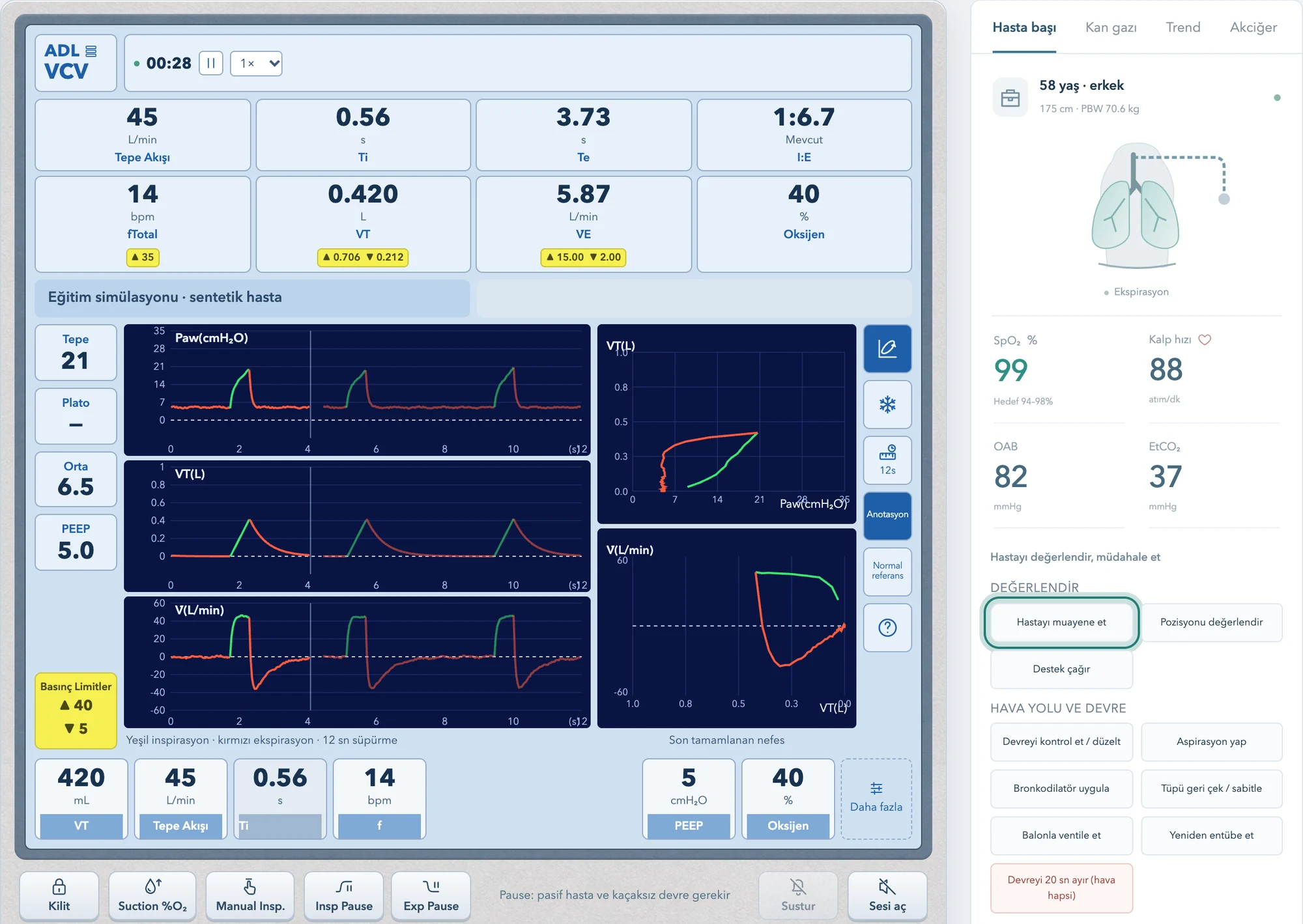
The application itself
12 synthetic adult cases
From baseline mechanics to ARDS, asthma, COPD, pneumothorax and tube displacement.
VCV, PCV and PSV
Volume, flow, rate, PEEP, oxygen and trigger settings, as on a real ventilator.
Waveforms and loops
Pressure, flow and volume over time, with pressure-volume and flow-volume loops.
Manoeuvres and blood gas
Inspiratory and expiratory holds, blood gas samples and trends.
Guided lessons
From first principles to advanced: predict, then observe, then reflect.
Built in Turkish
Designed for physicians in Türkiye, in their own language.
Where we come from, where we are going
March 2026Done
YÜREK begins
First version of the paper ECG digitisation pipeline.
September 2026Done
SOLUK runs
Physiology-based simulation engine and bedside interface.
October 2026Now
TÜSEB full application stage
Both projects passed TÜSEB 2026-B2 preliminary review; the full application is in progress. This is not a funding decision.
NextPlanned
Validation and pilot
Ethics-approved validation studies and pilot use with clinicians.
Questions from the clinic, software tested in the clinic.
Zülküf Sergen Ünlü, MD
Founder. Emergency medicine specialist, Mersin.
Founded Corio to turn two questions from daily emergency department work into software. Research interests: AI-assisted triage, ECG analysis and AI in emergency medicine.
How we work
A working tool first
Running software, not slides. Every image on this page is real product output.
Say the limits out loud
We don't present anything unvalidated as validated. A research prototype is called a research prototype.
Patient data stays protected
Development and demos use anonymous or synthetic data. Privacy law is part of the design.
Let's work together.
We are looking for people to build and test YÜREK and SOLUK with us.
Clinicians
Pilot use, feedback and teaching scenarios.
Researchers
Data, validation studies and joint publications.
Investors and institutions
Productisation, support programmes and partnerships.